



Academic Assurance
Founded in 1985, A.V.P. Global School stands beacon of excellence.

ACADEMIC ASSURANCE
Why are there no textbooks in Kindergarten?
In the early years, children learned best through direct experience. Instead of textbooks, learning happens through stories, movement, songs, practical activities, and guided play. This strengthens attention, language, memory, and social skills—creating a strong foundation for reading, writing, and academic learning later.
When do children start reading and writing?
Reading and writing were introduced when children are developmentally ready, typically in the early primary grades. By this time, children have developed strong listening skills, vocabulary, fine motor control, and comprehension—allowing literacy to emerge naturally and confidently, rather than through pressure or memorisation.
How is assessment done without exams in the early years?
Assessment is based on continuous observation, portfolios, and teacher feedback. Teachers closely track each child’s progress in language, numeracy readiness, social development, and emotional well-being. Parents receive meaningful insights into their child’s growth, not just marks or grades.
How is discipline handled?
Discipline is approached through guidance, consistency, and respect, not fear or punishment. Clear routines, predictable rhythms, and age-appropriate boundaries help children develop self-regulation, responsibility, and mutual respect—skills that last far beyond school.
What about competitive exams and higher studies later?
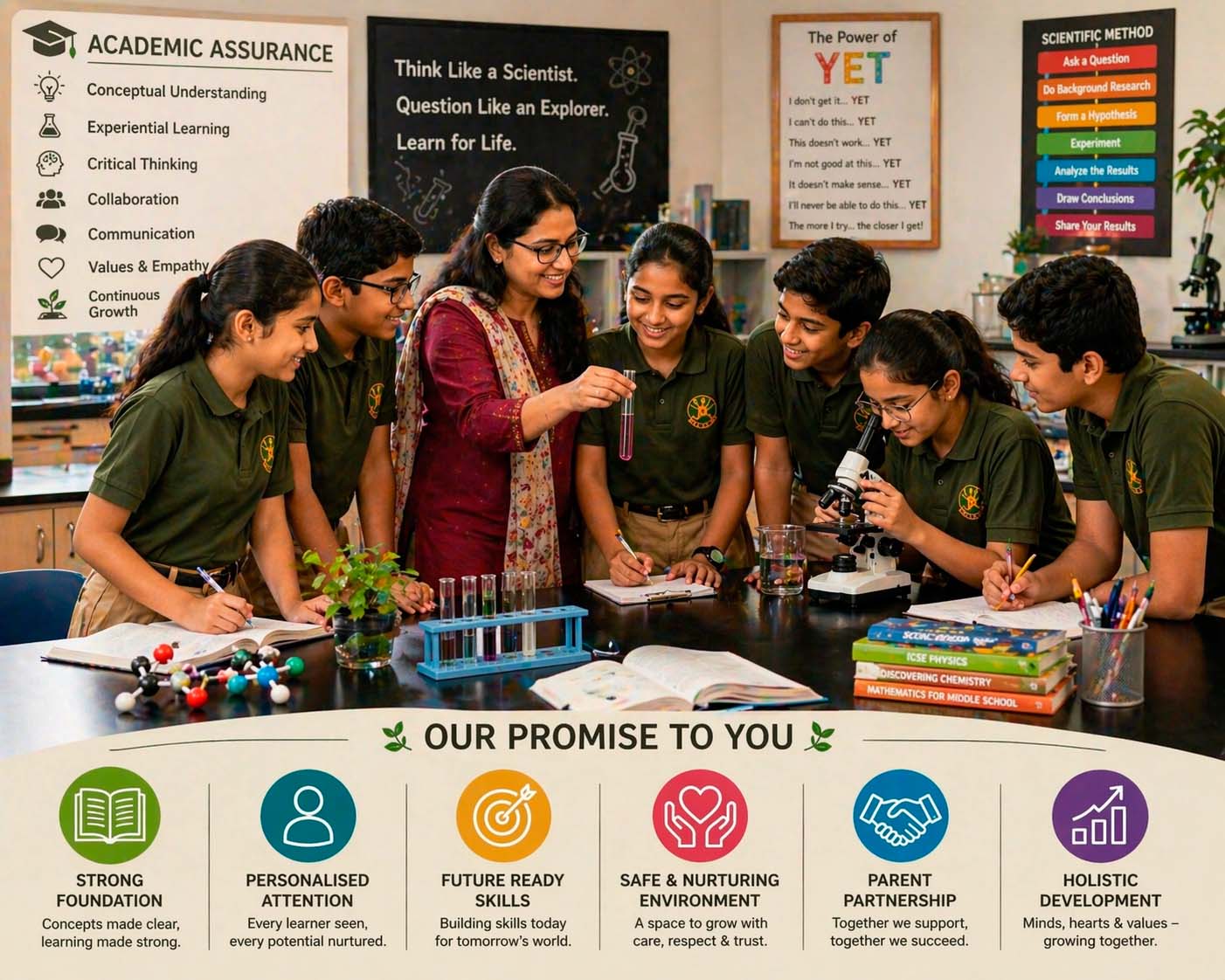
As students progress into the higher grades, learning becomes increasingly structured and concept-driven, within an academic progression designed to align with the expectations of the CISCE framework. Strong conceptual understanding, clear communication skills, analytical thinking, and disciplined study habits prepare students confidently for assessments, competitive examinations, and future higher-education pathways.
Academic Assurance for Today's World
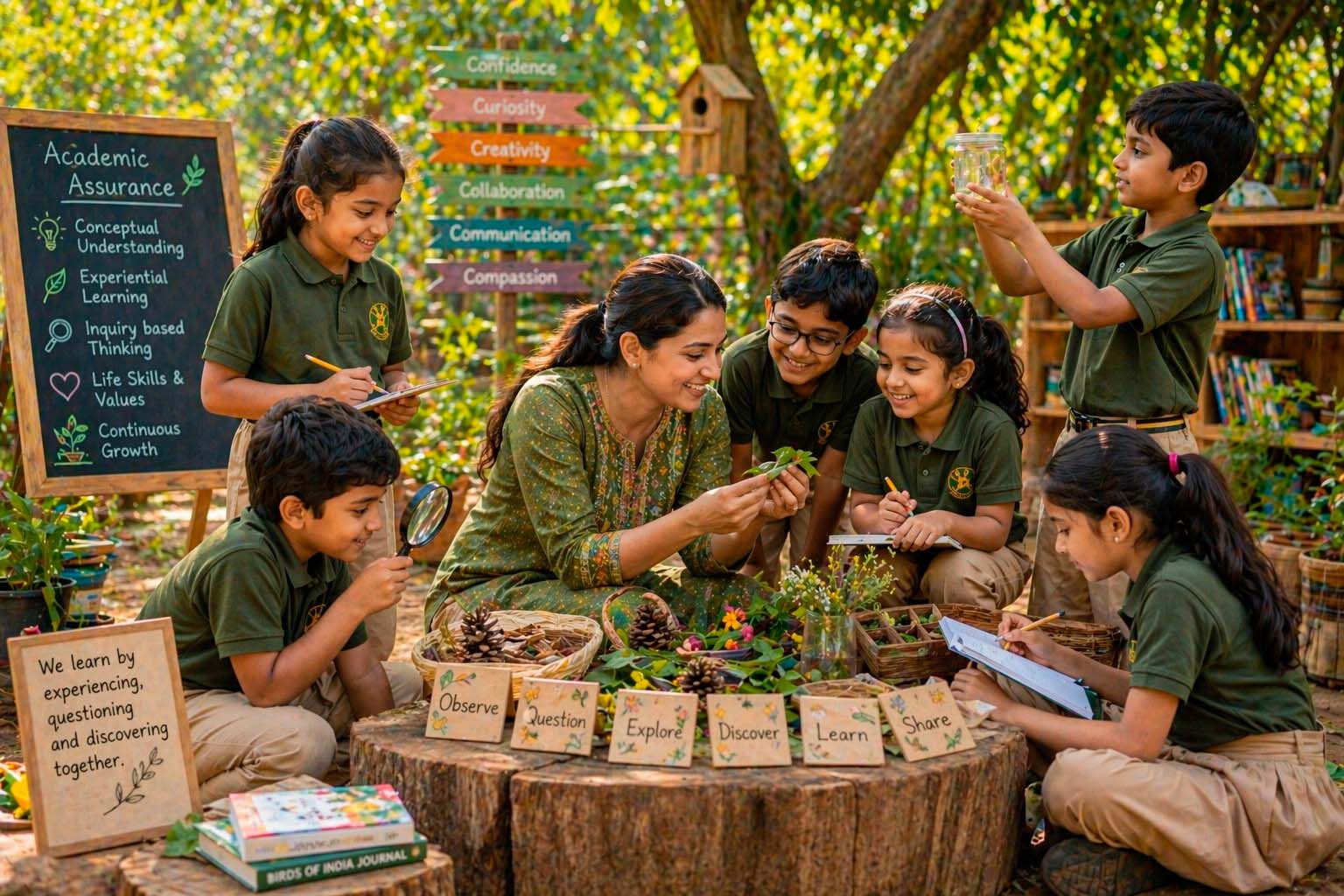
A common concern for parents is whether a child educated through a Waldorf-Inspired approach will be academically behind. In reality, children educated this way often to demonstrate stronger conceptual understanding, deeper focus, and greater independence once formal academics begin.
Our programme is carefully designed to align with the expectations of the CISCE framework ensuring that children meet and exceed expected academic standards—without sacrificing creativity, emotional well-being, or curiosity. Students are well prepared to transition to other boards if needed, as they develop transferable skills such as reasoning, language proficiency, adaptability, and confidence.
Most importantly, this approach is not a rejection of modern education—it is a thoughtful response to it. In an Indian context where early pressure is increasing, our model offers children the space to develop solid foundations first, resulting in more capable, resilient, and balanced learners in the long run. Parents who choose this approach are not choosing less—they are choosing depth over haste, understanding over memorisation, and long-term growth over short-term performance. It is a path that honours childhood while preparing children meaningfully for the future.